A gentle reflection on identity, motherhood, and finding yourself again in midlife
In every stage of life we look for ways to define ourselves.
At one point, I was the single mum with three children under four, hurtling through the school gates with what felt like an army around me, sad, lost and incredibly lonely, often unable to have a conversation for fear I might break down. That was my identity then. That was who I was. Looking back now, I can see just how much of that time was shaped by the invisible weight so many women carry, the mental load of motherhood, the constant thinking, planning, holding everything together.
But life moves, as it always does. The children grow, the double buggy gets sold (hooray!), and slowly, without you quite noticing, you begin to emerge again. I met the love of my life, and now I’m in a completely different chapter, the woman who waves her children off to their dad and sometimes heads away for a weekend with him. Same life, same person, but everything feels different.
And that’s the thing we don’t always allow ourselves to see, identities change, roles shift, purpose evolves. We spend so much time holding onto who we were or striving to become some next version of ourselves that we forget to just be with who we are right now.
I remember long ago reading Feel the Fear and Do It Anyway by Susan Jeffers, one of the first self-help books that really stayed with me, and there was a chapter with a simple grid, life broken down into sections, family, work, friends, health, contribution and more and the idea was that each one should hold roughly equal space. Because if one area takes over, if family becomes 90% of your world for example, then when that season shifts, when the children leave home, there’s a huge gap left behind. Back then, as a young single woman I couldn’t have imagined how life could be swallowed whole your children.
And when that begins to shift, it can feel unfamiliar. There’s a quiet sense of loss, or uncertainty, as they become more independent and need you in different ways. It’s sometimes spoken about as empty nest syndrome, but rarely talked about in a way that truly supports women through it.
I look at my mum’s generation, women born in the 50s, and so many of them never did anything for themselves. They didn’t put their own oxygen mask on first, they just kept giving, holding everything together. But I think something has shifted with our generation. Those of us born in the 80s are beginning to realise that we can’t do it all, and more than that, we don’t want to do it all. We’re starting to understand that if we don’t take care of ourselves, there’s nothing left to give.
And yet midlife brings its own weight. It’s that sandwich generation where you’re still caring for children who need you, while also supporting ageing parents who need your time, your care and your energy in a completely different way. Women stretched in every direction, giving and giving, often carrying the mental load without even realising it.
And for some of us, there’s another layer to this. We’ve had children later in life, which means we’re navigating the demands of young children at the same time as the hormonal shifts of perimenopause and menopause. For many women, this can bring moments of anxiety, overwhelm, or a sense of being out of balance, even when life on the outside looks full and good. It can feel like being pulled between two very different energies, the constant needs of little ones and the internal changes happening within your own body.
And so the question comes back again, quietly but persistently — who am I?
Not what do you do, not the question we so easily ask each other at parties or work events, as if our job defines us, but something deeper. As Oriah Mountain Dreamer writes in The Invitation, “it doesn’t interest me what you do for a living, I want to know what you ache for, and if you dare to dream of meeting your heart’s longing.”
And that really is the question, isn’t it.
What do you ache for?
Because the answer isn’t always in doing more, often it’s in remembering. Going back to that five-year-old version of you and asking what she loved. For me it was always art, colouring, that quiet focus where nothing else mattered. And now I find myself coming back to it, with a set of beautifully sharpened pencils and an adult colouring book, not to be good at it, not to achieve anything, but simply because it soothes me, because it connects me back to myself. I call this “Oxytocin Therapy”, where all the feel good hormones are at.
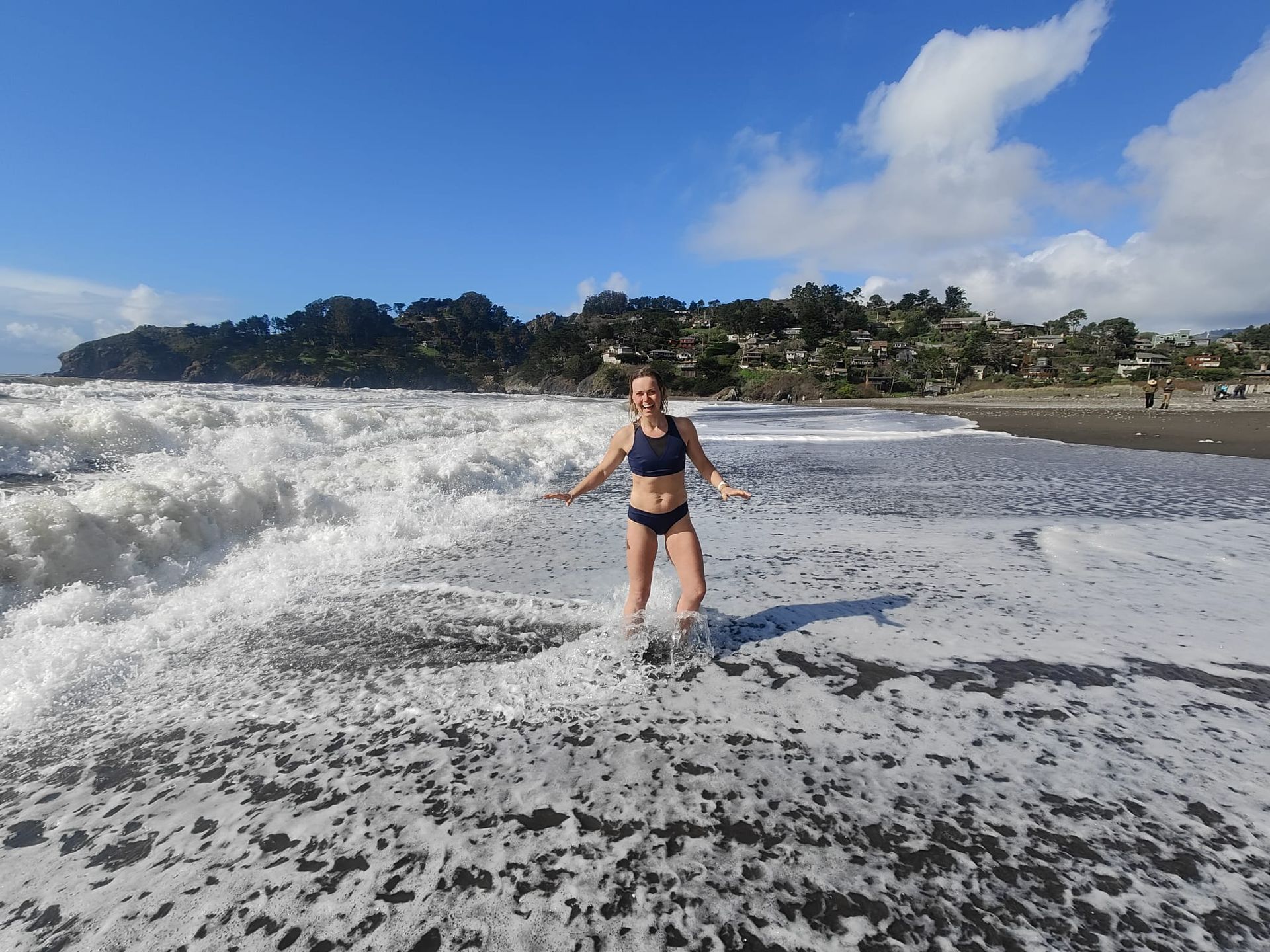
I find that feeling too when I’m in the sea, wild, cold, alive, where there’s no need for anything external to make me happy. It’s just me, present, enough as I am, basking in the therapy that is nature. And maybe that’s part of the answer. Learning to be with yourself. To find contentment without constantly looking to others for it.
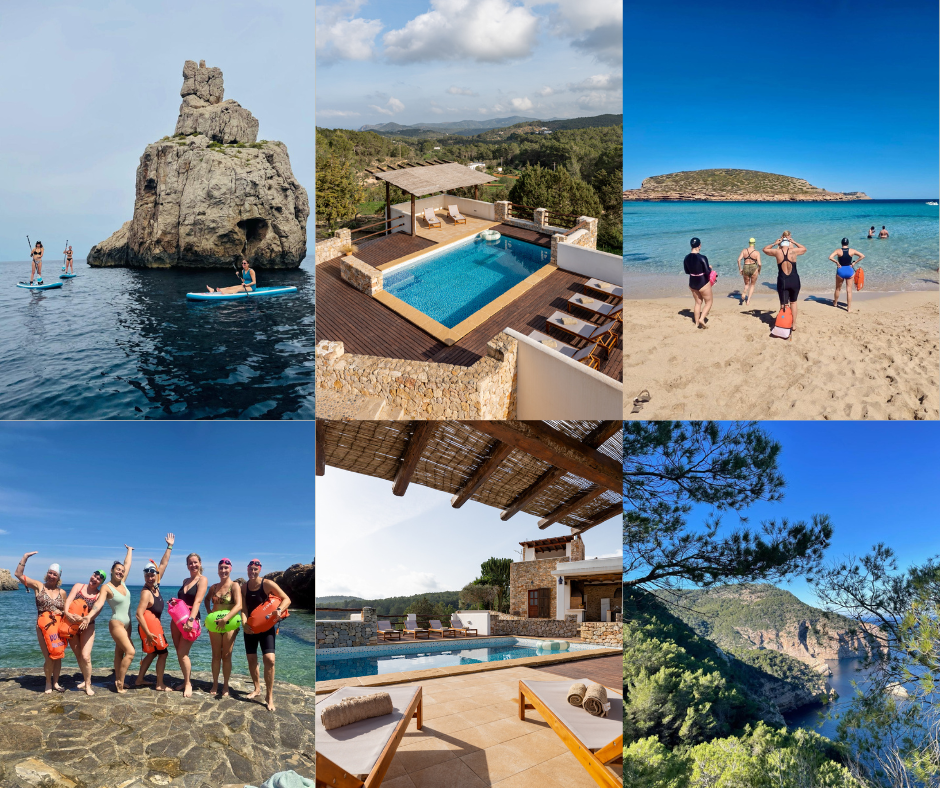
And I see this so often on retreats. Women arriving not quite able to put into words why they’ve come, just knowing they need space. Space away from the noise, the roles, the mother load. And over a few days, something softens. There’s time to walk, to sit, to breathe, to be in nature, to have conversations that go a little deeper than “what do you do.” And slowly, quietly, they begin to reconnect with themselves again. Not by becoming someone new, but by remembering who they already are, something we so rarely give ourselves the space to do in everyday life.
When life feels just so busy and overwhelming, when you’re hanging up yet another T-shirt on the washing line or cooking another meal, maybe that’s the moment to pause. To take a breath, to close your eyes and feel grateful for the people around you, for the life you’ve built, for the love that exists in it. Because what a gift that is, to love and to be loved.
At the end of it all, so much of what we think defines us falls away. As Rupi Kaur writes,
love like it’s the only thing you know how.
Because at the end of the day, all of this
this page
where you’re sitting
your degree
your job
the money
none of it really matters
What matters is love and human connection
Who you loved
How deeply you loved them
How you touched the people around you
And how much of yourself you gave
And maybe, when you strip everything else away, that’s where you’ll find your answers to midlife and what it means to be you.
Laura Bell is the founder of Zest Life and has been leading yoga and wellness retreats for over 25 years. A qualified yoga teacher and experienced outdoor guide, she has hosted more than 3,000 guests across retreats in the UK, Scandinavia, Ibiza and beyond. Laura writes about yoga, wild swimming, nature, and the science of restoration.